TYPE OF DIGITAL MARKETING Learn Digital Marketing – The Future of Online BusinessWelcomeWelcome to Digital Marketing, a platform created to help students, beginners, entrepreneurs, and professionals understand the fundamentals of digital marketing. In today's digital age, businesses are no longer limited to traditional advertising methods like newspapers, television, or radio. Instead, they use online platforms such as search engines, websites, social media, email, and mobile applications to reach customers worldwide.Digital marketing has become one of the fastest-growing career fields because almost every business needs an online presence. Whether it is a small local shop or a multinational company, digital marketing helps organizations connect with their target audience, promote their products and services, and increase sales.This website provides detailed information about digital marketing, its different types, tools, strategies, trends, and real-world case studies. By exploring each section, readers will gain practical knowledge that can help them start a career in digital marketing or improve their business's online presence.---What is Digital Marketing?Digital marketing is the process of promoting products, services, or brands using digital technologies and internet-based platforms. It includes websites, search engines, social media, email, online advertisements, and mobile applications. Unlike traditional marketing, digital marketing allows businesses to communicate directly with customers, measure campaign performance in real time, and reach a global audience at a relatively low cost.Today, digital marketing is used by companies of all sizes because customers spend a significant amount of time online. Businesses use digital marketing to increase brand awareness, generate leads, improve customer engagement, and drive sales.romotional offers, and personalized messages directly to customers' inboxes.Affiliate MarketingAffiliate marketing enables individuals or websites to earn commissions by promoting another company's products.Influencer MarketingCompanies collaborate with influencers who have large audiences on social media to promote products and build trust among followers.Mobile MarketingMobile marketing targets users through smartphones using mobile-friendly websites, SMS campaigns, apps, and push notifications.---Why Digital Marketing MattersDigital marketing has transformed how businesses communicate with customers. It provides several advantages over traditional marketing.- Businesses can reach customers worldwide.- Marketing costs are lower than many traditional methods.- Campaign performance can be measured instantly.- Businesses can target specific audiences based on age, interests, location, and behavior.- Customers can interact with brands through comments,graph here
What is Digital Marketing? IntroductionDigital marketing is the process of promoting products, services, or brands using the internet and digital technologies. It involves various online platforms such as websites, search engines, social media, email, mobile applications, and online advertisements to connect with customers. Unlike traditional marketing, which relies on television, newspapers, magazines, radio, and billboards, digital marketing enables businesses to reach customers instantly, interact with them in real time, and measure the effectiveness of their marketing campaigns.In today's digital world, people spend a significant amount of time on the internet for shopping, education, entertainment, banking, and communication. Businesses have recognized this shift in consumer behavior and now focus heavily on online marketing strategies. Whether it is a small local business or a multinational company, digital marketing helps organizations build brand awareness, generate leads, increase sales, and maintain strong relationships with customers.Digital marketing includes several techniques such as Search Engine Optimization (SEO), Search Engine Marketing (SEM), Social Media Marketing (SMM), Content Marketing, Email Marketing, Affiliate Marketing, Influencer Marketing, and Mobile Marketing. These techniques work together to help businesses achieve their marketing goals.One of the biggest advantages of digital marketing is that businesses can target a specific audience based on age, location, interests, online behavior, and purchasing habits. This targeted approach improves marketing efficiency and reduces unnecessary advertising costs. As internet usage continues to grow worldwide, digital marketing has become one of the most important skills for students, professionals, entrepreneurs, and organizations.---Benefits of Digital MarketingDigital marketing provides numerous benefits that make it an essential part of modern business.1. Global ReachBusinesses can promote their products and services to customers across different cities and countries without opening physical stores.2. Cost-EffectiveCompared to television advertisements, newspaper ads, or billboards, digital marketing requires a much smaller budget while reaching a larger audience.3. Targeted MarketingBusinesses can display advertisements only to people who are most likely to purchase their products by selecting factors such as age, gender, location, interests, and online activities.mer EngagementSocial media platforms, emails, live chats, and websites allow businesses to communicate directly with customers and respond to their questions quickly.on among customers.8. | Provides detailed real-time analytics and reports.Limited audience targeting.| Highly targeted marketing based on demographics and interests.Mostly one-way communication.| Two-way interaction between businesses and customers.Slower campaign modifications.| Campaigns can be edited instantly.Local or regional reach.|
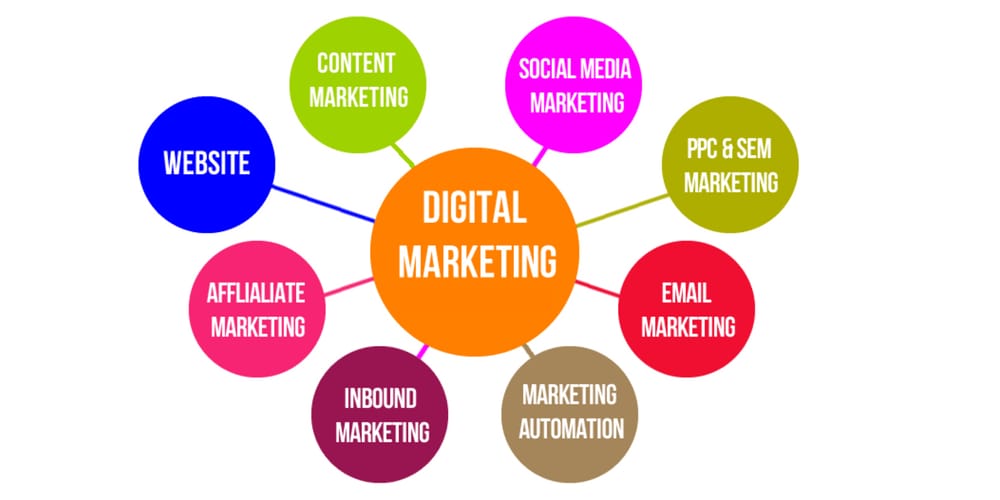
Types of Digital Marketing Introduction Digital marketing is a broad field that consists of various techniques and strategies used to promote products and services online. Each type of digital marketing serves a different purpose, but together they help businesses attract customers, build brand awareness, increase website traffic, and generate sales.Businesses usually use a combination of different digital marketing methods rather than relying on just one. For example, a company may optimize its website using SEO, run paid advertisements through Google Ads, post engaging content on social media, and send promotional emails to existing customers. This integrated approach improves the overall effectiveness of marketing campaigns.The major types of digital marketing are explained below.---1. Search Engine Optimization (SEO)Search Engine Optimization (SEO) is the process of improving a website so that it appears higher in search engine results when users search for relevant keywords. SEO helps businesses attract organic (free) traffic without paying for advertisements.SEO involves optimizing website content, improving page speed, using relevant keywords, creating high-quality backlinks, and ensuring a good user experience. Websites that rank higher on search engines generally receive more visitors, which increases the chances of generating leads and sales.Advantages of SEO- Free organic traffic- Better website visibility- Builds customer trust- Long-term marketing benefits- Improves user experience---2. Search Engine Marketing (SEM/PPC)Search Engine Marketing (SEM), also known as Pay-Per-Click (PPC) advertising, is a paid digital marketing strategy where businesses display advertisements on search engines such as Google.Advertisers bid on keywords, and when users search for those keywords, their advertisements appear at the top of the search results. Businesses pay only when someone clicks on the advertisement.Google Ads is the most popular platform used for SEM campaigns.Advantages of SEM- Instant website traffic- Highly targeted audience- Flexible advertising budget- Easy campaign tracking- Fast lead generation---3. Social Media Marketing (SMM)Social Media Marketing involves promoting products and services through platforms such as Facebook, Instagram, LinkedIn, X (formerly Twitter), Pinterest, Snapchat, and YouTube.Businesses create engaging posts, videos, reels, stories, and advertisements to connect with their audience. Social media also allows companies to interact directly with customers by responding to comments, messages, and reviews.A successful social media strategy focuses on providing valuable content rather than only promoting products.Advantages of Social Media Marketing- Builds brand awareness- Increases customer engagement- Improves customer loyalty- Generates website traffic- Cost-effective marketing---4. Content MarketingContent Marketing is the practice of creating and sharing valuable, relevant, and informative content to attract and retain customers.Instead of directly selling products, businesses educate their audience through blogs, articles, videos, podcasts, infographics, eBooks, tutorials, and case studies. High-quality content helps build trust and establishes a company as an expert in its field.Good content marketing also supports SEO by improving search engine rankings.Examples- Blog articles- Educational videos- Infographics- Product guides- Tutorials- NewslettersAdvantages- Builds customer trust- Improves SEO performance- Generates quality leads- Increases brand authority---5. Email MarketingEmail Marketing is one of the oldest and most effective forms of digital marketing. It involves sending personalized emails to customers for promotions, product updates, newsletters, offers, and announcements.Businesses often segment their email lists based on customer interests and behavior, making communication more relevant and effective.A successful email campaign includes an attractive subject line
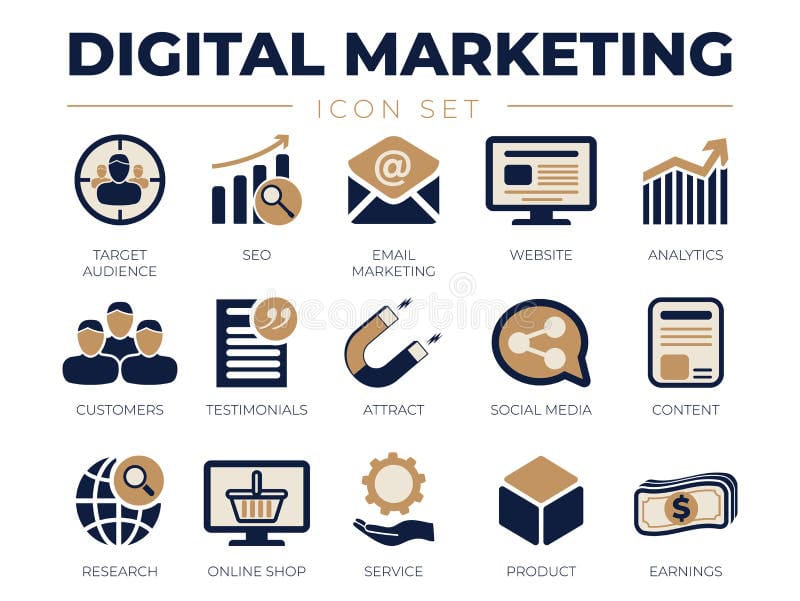
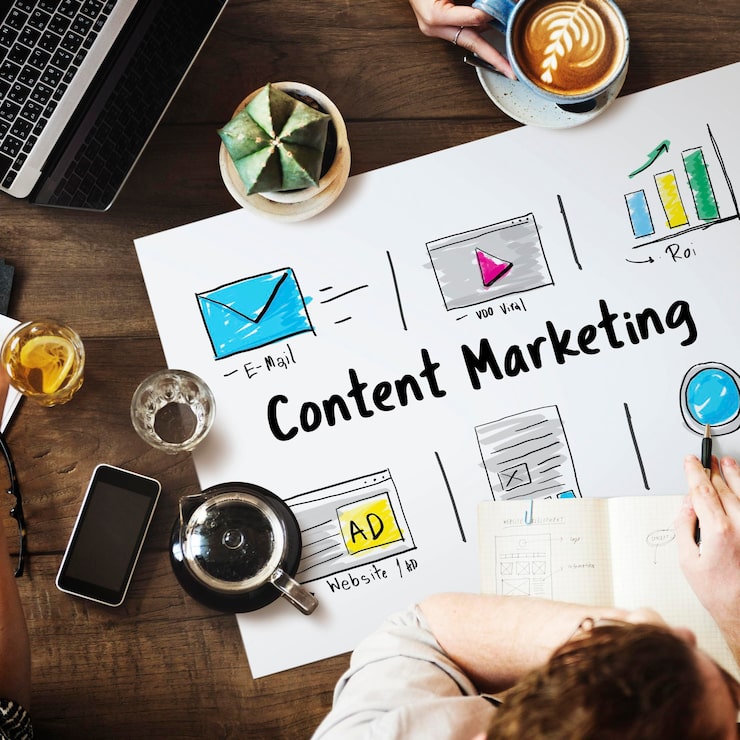
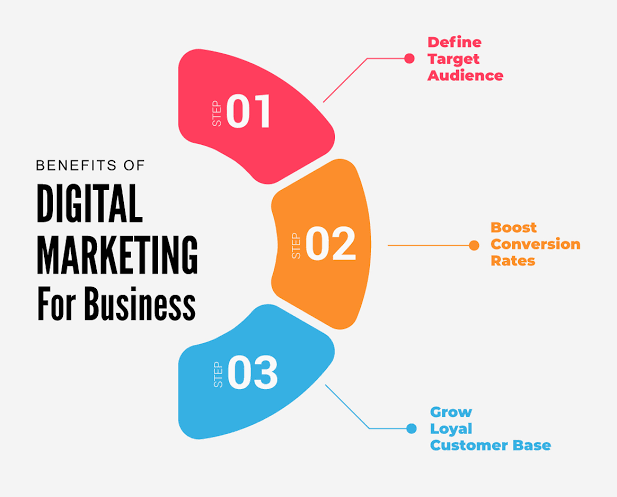
Advantages of Digital Marketing 1. Cost-effective – It is generally less expensive than traditional marketing methods like TV, radio, or print advertising .2. Global Reach – Businesses can reach customers anywhere in the world through websites, social media, and online advertising. 3. Targeted Audience – Digital marketing allows businesses to target specific groups based on age, location, interests, behavior, and more 4. Measurable Results – Tools like Google Analytics help track website traffic, conversions, and campaign performance in real time. 5. Higher Customer Engagement – Businesses can interact directly with customers through social media, emails, live chats, and online reviews .6. Improved Brand Awareness – Consistent online presence helps businesses increase visibility and build brand recognition. 7. Better Conversion Rates – Digital marketing strategies such as email marketing and search engine optimization (SEO) can increase sales and leads. 8. 24/7 Marketing – Websites and online advertisements are available at all times, allowing customers to access information and make purchases whenever they want .9. Personalization – Businesses can send personalized messages, recommendations, and offers based on customer preferences. 10. Competitive Advantage – Even small businesses can compete with larger companies by using effective digital marketing strategies.Overall, digital marketing helps businesses reach more customers, reduce marketing costs, improve customer relationships, and achieve better business growth.
Search Engine Optimization (SEO)What is SEO? Search Engine Optimization (SEO) is the process of improving a website so that it ranks higher on search engine results pages (SERPs). When users search for information, products, or services on search engines like Google, websites that follow good SEO practices are more likely to appear on the first page of the search results. Higher rankings increase website visibility, attract more visitors, and improve business opportunities.SEO focuses on increasing organic traffic, which means visitors come to a website naturally through search results rather than through paid advertisements. It involves optimizing website content, improving technical performance, using relevant keywords, and building authority through quality backlinks.For example, if a person searches for "best smartphones under ₹25,000," Google displays the most relevant websites. Websites with better SEO are more likely to appear at the top, increasing their chances of receiving clicks and potential customers.SEO is a long-term strategy. Unlike paid advertising, where traffic stops when the budget ends, SEO continues to generate visitors over time if the website is regularly updated with valuable content.Objectives of SEO- Increase website visibility.- Improve search engine rankings.- Generate organic traffic.- Enhance user experience.- Build credibility and trust.- Increase leads and sales.---Types of SEOSEO is mainly divided into three categories:1. On-Page SEOOn-Page SEO refers to all the optimization activities performed within a website to improve its ranking. It helps search engines understand the content and makes webpages more useful for visitors.Important On-Page SEO TechniquesKeyword ResearchSelecting relevant keywords that users frequently search for is the foundation of SEO. Keywords should be naturally included in titles, headings, content, URLs, and image descriptions.High-Quality ContentContent should be informative, original, engaging, and regularly updated. Search engines prioritize websites that provide useful information to users.Title TagsEach webpage should have a unique and descriptive title containing the main keyword. A good title increases click-through rates.Meta DescriptionA meta description is a short summary of a webpage displayed below the title in search results. An attractive description encourages users to click.Heading TagsProper use of H1, H2, H3, and H4 headings improves readability and helps search engines understand the structure of the page.Image OptimizationImages should be compressed for faster loading and include descriptive ALT text so search engines can understand them.Internal LinkingConnecting related pages within the same website helps users navigate easily and improves SEO performance.URL StructureURLs should be short, simple, and include relevant keywords.Example:Good URL:www.example.com/seo-guidePoor URL:www.example.com/page?id=12345---2. Off-Page SEOOff-Page SEO includes activities performed outside the website to improve its authority and reputation. Search engines consider backlinks from trusted websites as a sign of credibility.Major Off-Page SEO TechniquesBacklink BuildingGetting links from reputable websites improves search engine rankings.Guest BloggingWriting articles for other websites helps build authority and generate quality backlinks.Social Media PromotionSharing website content on social media platforms increases visibility and drives traffic.Brand MentionsWhen trusted websites mention a business or brand, search engines view it positively.Online ReviewsPositive customer reviews improve brand reputation and local SEO performance.Directory SubmissionSubmitting business information to trusted online directories helps increase visibility.---3. Technical SEOTechnical SEO focuses on improving the technical aspects of a website so that search engines can crawl, index, and rank it efficiently.Important Technical SEO FactorsWebsite SpeedF
Social Media Marketing IntroductionSocial Media Marketing (SMM) is one of the most important components of digital marketing. It involves using social media platforms to promote products, services, brands, or ideas. Today, billions of people use social media every day to connect with friends, watch videos, read news, and discover new products. This has made social media an essential marketing channel for businesses of all sizes.Unlike traditional advertising, social media marketing allows businesses to communicate directly with their audience. Companies can reply to comments, answer customer queries, conduct polls, share updates, and build long-term relationships with customers. It also enables businesses to target specific groups of people based on age, interests, location, occupation, and online behavior.A successful social media marketing strategy focuses on providing valuable and engaging content rather than only promoting products. Businesses that consistently create useful content can build trust, increase brand awareness, and encourage customer loyalty.---Objectives of Social Media MarketingThe main objectives of social media marketing include:- Increasing brand awareness.- Driving traffic to websites.- Generating leads and sales.- Building customer relationships.- Improving customer engagement.- Providing customer support.- Promoting products and services.- Creating a strong online community.- Enhancing brand reputation.Businesses often combine social media marketing with other digital marketing techniques such as SEO, content marketing, and email marketing to achieve better results.---Popular Social Media PlatformsDifferent social media platforms serve different audiences and marketing purposes. Choosing the right platform depends on the target audience and business goals.1. FacebookFacebook is one of the world's largest social networking platforms. Businesses use Facebook Pages to share updates, images, videos, promotions, and advertisements. Facebook also provides powerful advertising tools that allow businesses to target specific audiences.Best for:- Brand awareness- Local businesses- Community building- Paid advertising---2. InstagramInstagram is a visual platform focused on photos, short videos, Stories, and Reels. It is widely used by brands in fashion, beauty, travel, fitness, food, and lifestyle industries.Businesses use Instagram to showcase products, collaborate with influencers, and engage followers through interactive content.Best for:- Product promotion- Brand storytelling- Visual marketing---3. LinkedInLinkedIn is a professional networking platform used by businesses, recruiters, and professionals. Companies use LinkedIn for B2B marketing, recruitment, thought leadership, and sharing industry knowledge.Best for:- B2B marketing- Professional networking- Corporate branding---4. YouTubeYouTube is the largest video-sharing platform in the world. Businesses use YouTube to publish tutorials, product demonstrations, educational videos, customer testimonials, and advertisements.Video content helps businesses explain complex topics in a simple and engaging manner.Best for:- Video marketing- Product demonstrations- Educational content---5. X (formerly Twitter)X is a platform for sharing short messages, updates, and trending news. Businesses use it to communicate quickly with customers, share announcements, and participate in trending discussions.Best for:- Real-time updates- Customer support- News and announcements---6. PinterestPinterest allows users to discover and save ideas using images. Businesses in home décor, fashion, food, crafts, and design industries use Pinterest to drive website traffic.Best for:- Lifestyle products- DIY ideas- Creative inspiration---Organic vs Paid Social Media MarketingSocial media marketing can be divided into two categories: Organic Marketing and Paid Marketing.Organic Marketing| Paid MarketingFree to use| Requires advertising budgetFocuses on regul
Digital Marketing Tools IntroductionDigital marketing tools are software applications and online platforms that help marketers plan, execute, monitor, and improve their marketing campaigns. These tools simplify tasks such as website analysis, keyword research, search engine optimization (SEO), content creation, social media management, paid advertising, and performance tracking.In today's competitive online environment, businesses rely on digital marketing tools to make informed decisions based on data rather than guesswork. These tools provide valuable insights into customer behavior, website traffic, search rankings, advertising performance, and competitor strategies. They also save time by automating repetitive tasks and improving overall efficiency.Some tools are free to use, while others require a paid subscription. Choosing the right tool depends on the business's goals, budget, and marketing requirements. The following are some of the most popular digital marketing tools used by professionals around the world.---1. Google AnalyticsWhat is Google Analytics?Google Analytics is a free web analytics tool developed by Google. It helps website owners understand how visitors interact with their websites by collecting and analyzing data about user behavior.Using Google Analytics, businesses can measure website performance, identify the most popular pages, understand customer preferences, and make better marketing decisions.Features- Tracks website visitors.- Measures user engagement.- Identifies traffic sources.- Monitors conversions and sales.- Analyzes audience demographics.- Provides real-time website reports.- Measures campaign performance.Benefits- Improves marketing decisions.- Helps understand customer behavior.- Tracks Return on Investment (ROI).- Identifies successful marketing campaigns.- Supports business growth through data analysis.---2. Google Search ConsoleWhat is Google Search Console?Google Search Console is a free tool that helps website owners monitor and improve their website's presence in Google Search results. It allows users to identify technical issues, check indexing status, submit sitemaps, and monitor keyword performance.Features- Keyword performance reports.- Website indexing status.- XML sitemap submission.- Mobile usability reports.- Security issue detection.- Backlink monitoring.- Website performance insights.Benefits- Improves website visibility.- Detects indexing problems.- Helps improve SEO performance.- Monitors website health.- Increases organic search traffic.---3. Google AdsWhat is Google Ads?Google Ads is Google's online advertising platform that enables businesses to display advertisements on Google Search, YouTube, Gmail, Google Maps, and millions of websites across the Google Display Network.Advertisers bid on keywords, and advertisements are displayed to users searching for related products or services. Businesses usually pay only when someone clicks on their ad.Features- Search advertisements.- Display advertisements.- Video advertising.- Shopping campaigns.- App promotion.- Audience targeting.- Budget control.Benefits- Instant website traffic.- Targeted advertising.- Flexible campaign budgets.- Detailed performance reports.- Higher lead generation.- Increased sales opportunities.---4. CanvaWhat is Canva?Canva is an online graphic design platform that allows users to create professional-quality visuals without requiring advanced design skills. It offers thousands of templates, icons, images, fonts, and design elements.Digital marketers use Canva to create social media posts, presentations, posters, banners, infographics, advertisements, logos, brochures, and marketing materials.Features- Drag-and-drop editor.- Ready-made templates.- Photo editing tools.- Background remover (Pro version).- Team collaboration.- Brand kit.- Social media scheduling.Benefits- Easy to use.- Saves design time.- Creates attractive marketing content.- No professional design expe
Chapter 8: Latest Trends in Digital MarketingIntroductionDigital marketing is constantly evolving as new technologies, consumer preferences, and online platforms continue to change. Businesses must keep up with the latest trends to remain competitive and effectively reach their target audience. Modern consumers expect personalized experiences, fast communication, and engaging content across multiple digital platforms.Advancements in Artificial Intelligence (AI), machine learning, voice assistants, video content, and smart devices have transformed the way businesses communicate with customers. Companies that adopt these trends can improve customer satisfaction, increase brand awareness, and achieve better marketing results.This chapter discusses some of the latest trends that are shaping the future of digital marketing.---1. Artificial Intelligence (AI) in MarketingWhat is AI in Marketing?Artificial Intelligence (AI) refers to computer systems that can perform tasks requiring human intelligence, such as learning, analyzing data, recognizing patterns, and making decisions. In digital marketing, AI helps businesses automate repetitive tasks, understand customer behavior, and deliver personalized experiences.AI-powered tools can analyze large amounts of customer data within seconds, allowing marketers to make informed decisions and improve campaign performance.Applications of AI in Marketing- Personalized product recommendations.- AI chatbots for customer support.- Predictive customer behavior analysis.- Automated email marketing.- Content creation and optimization.- Smart advertising campaigns.- Customer segmentation.- Marketing automation.Benefits- Saves time and effort.- Improves customer experience.- Increases marketing efficiency.- Delivers personalized content.- Reduces human errors.- Improves return on investment (ROI).---2. Voice SearchWhat is Voice Search?Voice search allows users to search the internet using spoken commands instead of typing. People use voice assistants such as Google Assistant, Siri, and Alexa to search for information, products, and services.As smartphones and smart speakers become more popular, voice search is becoming an important part of digital marketing.Importance of Voice SearchVoice searches are usually longer and more conversational than typed searches. Businesses must optimize their content to answer common questions in natural language.Voice Search Optimization Tips- Use conversational keywords.- Answer frequently asked questions (FAQs).- Improve website speed.- Optimize for local SEO.- Create mobile-friendly websites.- Use structured data (Schema Markup).Benefits- Better user experience.- Faster searches.- Increased mobile traffic.- Higher local search visibility.- Improved accessibility.---3. Video MarketingWhat is Video Marketing?Video marketing involves creating and sharing videos to promote products, services, or brands. Videos are one of the most engaging forms of content because they combine visuals, sound, and storytelling.Businesses use videos on websites, YouTube, Instagram, Facebook, LinkedIn, and other platforms to educate, entertain, and influence customers.Types of Marketing Videos- Product demonstrations.- Tutorials and how-to videos.- Customer testimonials.- Brand stories.- Live streaming.- Educational videos.- Short-form videos (Reels and Shorts).- Behind-the-scenes videos.Benefits- Higher audience engagement.- Better customer understanding.- Increased website traffic.- Improved conversion rates.- Better social media performance.- Stronger brand awareness.---4. Connected TV (CTV) AdvertisingWhat is CTV Advertising?Connected TV (CTV) Advertising refers to advertisements shown on televisions that are connected to the internet. These advertisements appear on streaming platforms instead of traditional cable television.As more people watch content through streaming services, CTV advertising has become an important digital marketing channel.Features- High-quality v
Case Studies 1 IntroductionCase studies are an important part of digital marketing because they demonstrate how companies apply marketing strategies in real-world situations. They help students and marketers understand how businesses use digital platforms to increase brand awareness, engage customers, and achieve their business objectives.By studying successful marketing campaigns, we can identify the strategies that worked, understand the challenges faced by companies, and learn valuable lessons that can be applied to future marketing campaigns.The following case studies highlight two globally recognized digital marketing campaigns that achieved remarkable success.---Case Study 1: Coca-Cola – "Share a Coke" CampaignBackgroundCoca-Cola is one of the world's most recognized beverage brands. To create a more personal connection with customers, the company launched the "Share a Coke" campaign. Instead of printing only the Coca-Cola logo on bottles, the company printed popular first names on the labels.The campaign encouraged customers to find bottles with their own names or the names of friends and family members and share them on social media.ObjectivesThe main objectives of the campaign were:- Increase customer engagement.- Encourage product purchases.- Strengthen emotional connections with customers.- Increase social media conversations.- Improve brand awareness among young consumers.Digital Marketing Strategies UsedSocial Media MarketingCustomers were encouraged to post pictures of personalized Coca-Cola bottles on social media platforms using campaign hashtags.User-Generated Content (UGC)Instead of relying only on company advertisements, Coca-Cola encouraged customers to create and share their own content, increasing authenticity and reach.Personalized MarketingPrinting customer names on bottles made the campaign more personal and memorable.Influencer MarketingInfluencers and celebrities participated in the campaign by sharing personalized bottles with their followers.ResultsThe campaign achieved significant success:- Millions of personalized bottles were sold.- Social media engagement increased dramatically.- Brand awareness improved globally.- Customer participation exceeded expectations.- Sales increased in several markets.Key Success Factors- Emotional connection with customers.- Personalized products.- Strong social media strategy.- Customer-generated content.- Simple yet creative campaign idea.---Case Study 2: Nike – "You Can't Stop Us"BackgroundNike is one of the world's leading sportswear brands. During a period when many sporting events were disrupted, Nike launched the inspirational "You Can't Stop Us" campaign.The campaign featured athletes from different sports, backgrounds, and countries through a powerful split-screen video that symbolized unity, determination, and resilience.The campaign quickly became one of the most viewed and shared marketing videos worldwide.ObjectivesThe campaign aimed to:- Inspire people through sports.- Strengthen Nike's brand identity.- Increase customer engagement.- Promote diversity and inclusion.- Build emotional connections with audiences.Digital Marketing Strategies UsedVideo MarketingNike created a professionally produced video that delivered a strong emotional message.Social Media MarketingThe campaign was promoted across YouTube, Instagram, Facebook, X (formerly Twitter), and other digital platforms.Emotional StorytellingInstead of directly promoting products, Nike focused on inspiring people through stories of perseverance and teamwork.Influencer and Athlete ParticipationWell-known athletes featured in the campaign, helping increase credibility and audience reach.ResultsThe campaign produced outstanding results:- Millions of video views within days.- Extensive social media sharing.- Positive global media coverage.- Increased customer engagement.- Stronger brand loyalty.Key Success Factors- Powerful storytelling.- High-quality video production
ChapContact / ReferencesContact Information Thank you for exploring this Digital Marketing project. This project has been prepared to provide students and beginners with a clear understanding of digital marketing concepts, strategies, tools, trends, and real-world applications.Student DetailsProject Title: Digital Marketing – Learn, Explore and GrowPrepared By: Your NameRoll Number: ______________________Course: Bachelor of Computer Applications (BCA)Semester: ______________________Subject: Digital MarketingCollege/University: ______________________Faculty/Guide Name: ______________________Academic Session: 2026–2027---Project ObjectiveThe main objective of this project is to provide comprehensive knowledge of digital marketing and its importance in today's business environment. It explains the different types of digital marketing, search engine optimization (SEO), Google Ads, social media marketing, digital marketing tools, current trends, and successful marketing campaigns.This project aims to help students understand how businesses use digital platforms to promote products, communicate with customers, increase sales, and build strong brand awareness.---Skills LearnedAfter studying this project, readers will be able to:- Understand the fundamentals of digital marketing.- Differentiate between traditional and digital marketing.- Explain different types of digital marketing.- Understand the importance of SEO and Google Ads.- Use popular digital marketing tools.- Analyze current digital marketing trends.- Learn from successful marketing campaigns.- Develop basic digital marketing strategies.---References & ResourcesThe following books and online resources were referred to while preparing this project:Books1. Philip Kotler – Marketing Management2. Philip Kotler, Hermawan Kartajaya & Iwan Setiawan – Marketing 5.0: Technology for Humanity3. Dave Chaffey – Digital Marketing: Strategy, Implementation and Practice4. Ian Dodson – The Art of Digital Marketing5. Ryan Deiss & Russ Henneberry – Digital Marketing For DummiesOnline Resources- Google Analytics Documentation- Google Ads Help Center- Google Search Central Documentation- HubSpot Marketing Blog- SEMrush Blog- Ahrefs Blog- Canva Design School- OpenAI ChatGPT- Search Engine Journal- Search Engine LandThese resources provide updated information about digital marketing concepts, tools, and best practices.---Future Scope of Digital MarketingDigital marketing is expected to continue growing rapidly due to increasing internet usage, smartphone adoption, and technological advancements. Emerging technologies such as Artificial Intelligence (AI), Machine Learning, Voice Search, Augmented Reality (AR), Virtual Reality (VR), and Marketing Automation will further transform how businesses interact with customers.Career opportunities in digital marketing are also increasing. Some popular career roles include:- Digital Marketing Executive- SEO Specialist- Google Ads Expert- Social Media Manager- Content Marketing Specialist- Email Marketing Executive- Web Analyst- Performance Marketer- Marketing Automation Specialist- Digital Marketing Manager- Freelancer- Digital Marketing ConsultantProfessionals with strong digital marketing skills will continue to be in high demand across industries.---ConclusionDigital marketing has revolutionized the way businesses communicate with customers. It enables organizations to reach global audiences, promote products efficiently, measure campaign performance, and build long-term customer relationships. Unlike traditional marketing, digital marketing offers real-time insights, targeted advertising, and cost-effective promotional opportunities.Throughout this project, we explored the fundamentals of digital marketing, its major types, SEO, Google Ads, social media marketing, essential digital marketing tools, the latest industry trends, and successful real-world case studies. Each chapter highlighted how digital technologies have tra